How to Safely Import Used Electric Cars for Sale in China: The Ultimate Battery (SOH) and Charging Standard Guide
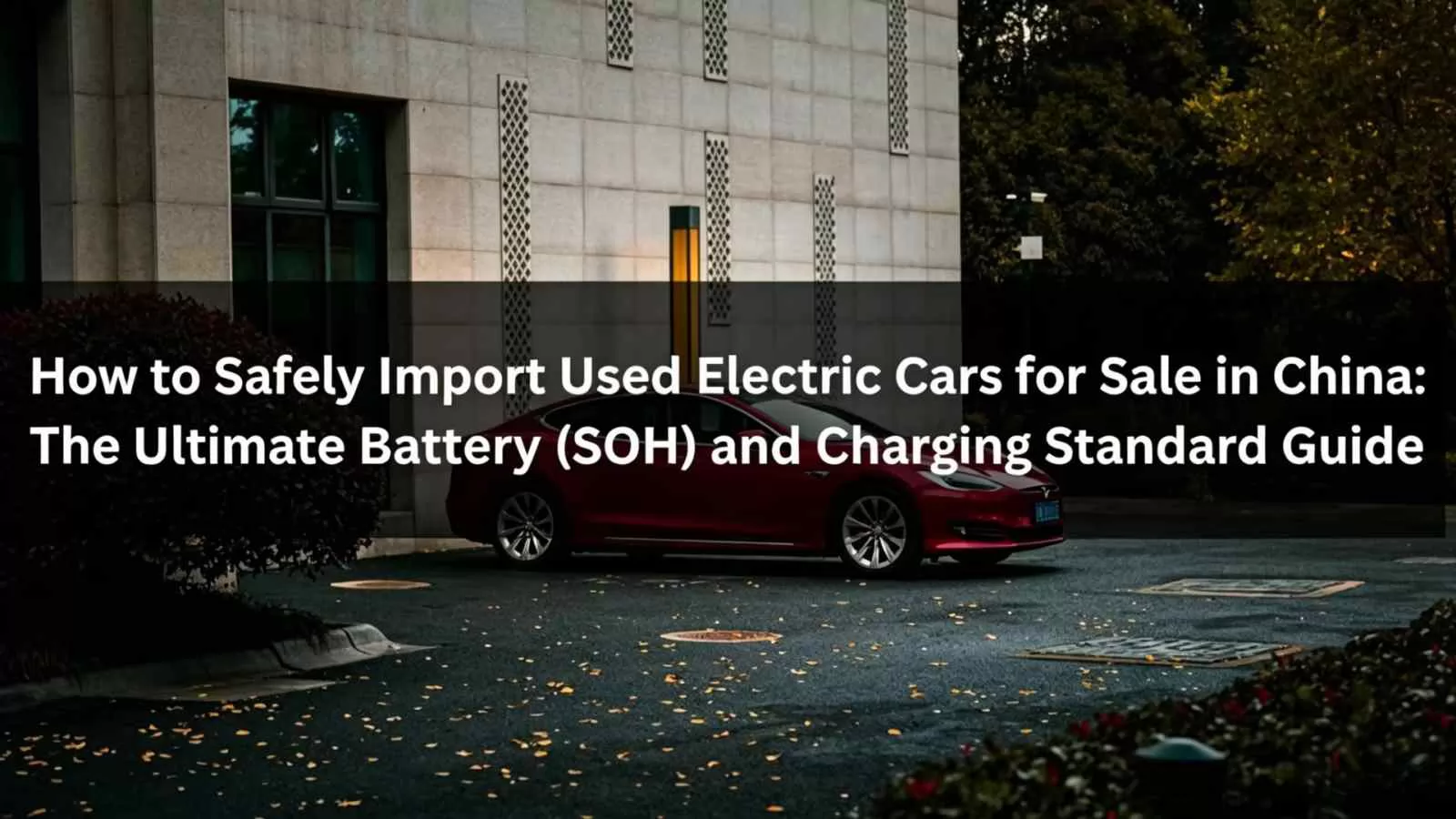
For global automotive B2B dealers and wholesale distributors, the decision to import used electric cars from China has transitioned from a speculative venture to an essential volume-driving strategy. Powered by rapid production scales and advanced technical integration, Chinese electric vehicles—ranging from the high-demand BYD Ocean Series (such as the Seal, Dolphin, and Seagull) to luxury SUVs like Denza and Deepal—now dominate the global used EV export lanes.
However, importing used new energy vehicles (NEVs) carries distinct technical and financial risks that differ significantly from sourcing internal combustion engine (ICE) vehicles. For an overseas B2B buyer, two massive hurdles stand between a highly profitable shipment and a costly yard of unsellable inventory:
- Quantifying EV Battery Degradation: How do you accurately assess the State of Health (SOH) of a lithium-ion pack from thousands of miles away?
- Infrastructure Gridlock: How do you resolve the compatibility issues between China's domestic GB/T charging standard and your local charging infrastructure (CCS1, CCS2, or CHAdeMO)?
This comprehensive B2B procurement guide dismantles these barriers, providing you with actionable, engineering-grade methodologies to safeguard your capital and technical assets.
1. Understanding Battery SOH
Unlike traditional cars, where the engine’s condition is reflected in physical sounds or mileage, an EV’s value is fundamentally tied to its battery pack. The battery represents up to 40% to 50% of the vehicle’s total worth. Therefore, relying solely on odometer readings when you import used electric cars from China is a critical mistake.
What is Battery SOH?
State of Health (SOH) is a percentage metric comparing a battery pack's current usable capacity against its original factory-fresh specification:
As cells undergo charge-discharge cycles, they experience physical and chemical wear. For a B2B dealer, importing used EVs with an SOH below 80% introduces significant retail risks, as it accelerates driving range drop-offs and triggers customer dissatisfaction.
How to Test SOH
To prevent sourcing degraded vehicles, global wholesale buyers must mandate that their Chinese export partners follow a strict verification protocol:
BMS On-Board Diagnostics (OBD-II Reading): Technicians must interface directly with the vehicle’s CAN bus using professional diagnostic scanners. By reading the internal Battery Management System (BMS) data registers, you can extract the live "SOH percentage" calculated directly by the vehicle’s internal controller.
Cell Voltage Balance Under Load: A healthy battery pack should maintain tight voltage consistency across all individual cell groups. During diagnostic evaluations under high-current discharge (accelerating or fast-charging), any cell voltage deviation (delta) exceeding 30-50 mV indicates cell imbalance or premature localized cell failure.
Battery Chemistry Distinctions: Sourcing teams must recognize the operational differences between battery types. For example, the Lithium Iron Phosphate (LFP) chemistry used in BYD’s revolutionary Blade Battery exhibits exceptional cycle longevity and safety under extreme conditions but requires specific BMS calibration to accurately measure state-of-charge. Conversely, Nickel Manganese Cobalt (NCM) chemistries offer higher energy density but degrade faster if consistently fast-charged to 100%.
Our Diagnostics Standard
At Unicom Motor Group Co., Ltd, we have eliminated the guesswork from remote purchasing. Recognizing that international B2B buyers cannot physically run diagnostics in our yards, we provide a complete, transparent digital quality dossier for every vehicle.
Before any vehicle is cleared for shipping, our factory-trained engineers subject the EV to rigorous diagnostic sweeps. Every unit in our wholesale yard—from luxury family MPVs like the Denza D9 to highly efficient commuter sedans—comes with an official Unicom Certified Battery Diagnosis Report. This report details the live SOH, internal resistance, and cell-by-cell voltage uniformity.
2. Resolving the Charging Barrier
The second technical bottleneck for global distributors is the charging interface. Electric cars manufactured for the Chinese domestic market utilize the national standard GB/T (Guobiao) protocol for both AC and DC charging.
If your target market is in Europe, the Middle East, Southeast Asia, or South America, your local public infrastructure likely utilizes CCS Combo 2 (CCS2).Exporting a GB/T-equipped Chinese vehicle directly to a CCS2-dominant market without a dedicated charging strategy will result in an unchargeable vehicle on delivery.
Two Sourcing Solutions
B2B dealers have two highly viable pathways to resolve this compatibility issue:
Solution A: High-Power Smart Adapters (Fast & Cost-Effective): For immediate retail, utilizing external converters is the most practical solution. While AC charging adapters are simple and passive, DC fast charging requires active GB/T to CCS2 DC Converters equipped with internal microcontrollers to translate communication protocols in real-time.
Solution B: Local Infrastructure Retrofitting (Scale Solution): For large-scale fleet operators or exclusive regional distributors, importing specialized GB/T commercial charging stations and installing them at your local hubs is often more cost-effective than buying hundreds of individual converters.
Our Hardware Support
As a highly experienced, fully licensed vehicle exporter, Unicom Motor Group does not just ship cars—we export complete, operational vehicle systems.
Through our dedicated aftermarket division, we provide buyers with a fully integrated ecosystem. When you purchase your used EV inventory from us, we can supply factory-direct GB/T smart commercial charging stations, robust home wallboxes, and laboratory-tested active DC adapters along with your shipment. This ensures your technical teams can charge and demo the vehicles immediately upon port arrival.
3. Navigating Export Regulations and Quality Compliance
Understanding the administrative and legal frameworks of Chinese automotive exports is just as critical as analyzing the vehicle's physical battery.
Licensing & Audits
The Chinese government regulates the export of used automobiles to prevent low-quality, unsafe vehicles from leaving the country:
Formal Export Licensing: Every vehicle exported must obtain an official Used Car Export License. Working with a registered enterprise like Unicom Motor Group ensures that your shipments are processed legally, avoiding customs delays at Chinese exit ports.
Compulsory Third-Party Audits: Before an export license is granted, every used vehicle must undergo a mandatory inspection by an accredited third-party testing agency to verify structural integrity, braking performance, and high-voltage electrical safety.

4. Preventing Mileage Fraud
Beyond battery SOH, odometer tampering remains a rampant concern in cross-border used vehicle sourcing. While physical cosmetic wear can be easily masked with a quick interior detail, verifying a vehicle's true operating history is vital to protecting your investment.
The Mileage Trap
Unscrupulous brokers often roll back digital odometers to artificially inflate a vehicle's market value. For an importer, buying a vehicle with a hidden, high-mileage history means inheriting an electric motor and suspension system close to their mechanical wear limits, even if the battery SOH appears acceptable.
Our Digital Verification
At Unicom Motor Group, we eliminate this risk through comprehensive historical audits. Our team cross-references the on-board digital odometer with official Chinese national insurance registries, previous registration databases, and authorized dealer service logs. Every vehicle exported is accompanied by a certified, tamper-proof vehicle history report, guaranteeing that the mileage displayed on the dashboard matches the vehicle’s actual road history.
5. Securing Transit & Battery Safety
Shipping high-voltage electric vehicles across oceans involves strict maritime cargo regulations. Unlike internal combustion engine cars, used EVs are classified as hazardous class 9 dangerous goods due to the chemical energy stored within their battery packs.
Hazardous Cargo Risks
Improper battery preparation before shipping can lead to catastrophic logistics delays, port rejections, or thermal runaway risks during long maritime transits. To secure cargo space and ensure smooth port-of-entry customs clearance, used EVs must comply with stringent international maritime dangerous goods (IMDG) packing codes.
Our Export Logistics
This is where our comprehensive export infrastructure makes the difference. Unicom Motor Group Co., Ltd manages the entire logistics chain under specialized safety protocols.
Our logistics team ensures that all vehicle batteries are discharged to the optimal transit State of Charge (SOC)—typically between 30% and 50%—to minimize chemical reactivity during voyages. Furthermore, we handle all specialized dangerous goods documentation (including MSDS certificates and battery safety declarations), securing reliable vessel space and guaranteeing that your vehicles arrive at your home port safely, legally, and without unexpected customs bottlenecks.
Conclusion
The global transition to sustainable mobility has created an unprecedented demand for high-quality, cost-competitive electric vehicles. If you are preparing to import used electric cars from China, managing your technical risks by demanding transparent battery diagnostics and securing reliable charging compatibility is the definitive path to achieving commercial success.
By aligning your procurement operations with an established, technically proficient supply partner like Unicom Motor Group Co., Ltd, you eliminate the traditional blind spots of cross-border sourcing. We combine direct access to top-tier manufacturer networks, rigorous internal QC protocols, and a comprehensive suite of charging hardware accessories to deliver a seamless, risk-mitigated importing experience.
Frequently Asked Questions
Q1: Can we request a live video diagnostic scan of the battery before completing payment?
Yes. When working with Unicom Motor Group, buyers can request live-streamed diagnostic procedures showing the real-time SOH percentages, active cell voltage deltas, and diagnostic error codes under physical load.
Q2: Do BYD Blade Batteries in used cars degrade slower than standard NCM chemistry?
Generally, yes. Lithium Iron Phosphate (LFP) systems, particularly BYD’s structural Blade Battery design, exhibit superior thermal safety and much longer cycle life compared to traditional Nickel Manganese Cobalt (NCM) cells. While NCM batteries typically retain 80% capacity for 1,000 to 1,500 full charge cycles, high-quality LFP cells can often exceed 2,500 to 3,000 cycles before experiencing similar levels of degradation.
Q3: Are GB/T to CCS2 adapters safe for long-term daily DC fast charging?
Yes, provided they are active protocol converters. High-grade industrial active DC converters can safely support charging rates of 150 kW to 200 kW, provided they are manufactured with high-conductivity copper pins, reliable over-temperature safety cutoffs, and premium weatherproofing.
|
Ready to experience the Unicom Motor difference? Contact our aftermarket division today to receive our latest Certified Pre-Owned inventory list, discuss your specific requirements, and receive a customized export quotation for your market. ✉ bruceliu@unicommotors.com | ✆ +86 137 6408 2602 | unicommotors.com/used-car |
0
Comments
Leave a Comment
Your email address will not be published. Required fields are marked *
Name can't be empty
Email error!
Message can't be empty
😍
😜
😳
😌
😄
😘
😝
😒
😃
😚
😚
😛
😟
😧
😀
😉
😓
😱
😤
😣
😂
😥
😩
😠
😢
😭
😰
😨
😡
😆
😪
😅
😐
😇
😋
😴
👿
😕
😏
😷
😵
😟
😮
😯
😑
👧
👴
😧
😬
😾
👶
👱
👵
👸
🙀
👺
👦
👩
👨
😽
😿
🙈
💩
💥
💤
😼
😹
🙉
🔥
✨
💦
👎
✌
👆
👈
💪
💹
👍
👊
💴
💶
💷
💸
👉
💵
🙏
🌎
🏧
👏
💳
👇
💑
🙆
🙅
💁
👫
👭
🙎
🙇
👑
👔
Submit Comment
Most Popular
-
 Jan 29, 2026Find a Jetour Dealer Near Me: Your Complete Buying Guide
 -
 Jun 22, 2026BYD Ocean Series: Dolphin, Seal & Seagull EVs Explained
 -
 Nov 19, 2025Chinese Car Export New Policy Explained: Impact, Requirements, and How We Help You Meet OEM Compliance
 -
 Nov 14, 2025Fang Cheng Bao Ti7 Overview: Full Specs, Features & Highlights


Laster Blogs
-
 Sep 20, 2026BYD Chairman Wang Chuanfu Visits Our DENZA and LEOPARD Dealerships
 -
 Sep 11, 2026How Much Does a Used Car Cost in 2026? Prices, Factors & Import Costs
 -
 Aug 31, 2026Chinese Used Car Buying Guide: How to Choose a Reliable Vehicle from China
 -
 Jul 15, 2026How to Safely Import Used Electric Cars for Sale in China: The Ultimate Battery (SOH) and Charging Standard Guide


Set A Consultation Today
Name can't be empty
Email error!
Send Your Message
*We respect your confidentiality and all
information are protected.


