Chinese Used Car Buying Guide: How to Choose a Reliable Vehicle from China
The growing availability of Chinese used cars has created new sourcing opportunities for international buyers, car dealers, importers, distributors, and fleet operators. China offers a broad selection of gasoline, hybrid, and electric vehicles across different price ranges and vehicle segments. For overseas buyers, however, sourcing a suitable vehicle requires more than comparing listing prices.
Before purchasing a used car from China, buyers should assess the vehicle’s age, mileage, condition, history, import eligibility, documentation, shipping method, and total landed cost. They should also work with a supplier that can provide reliable vehicle information and support the export process. This guide explains the main considerations involved in selecting, inspecting, purchasing, and importing used cars from China.
Why Buy Chinese Used Cars from China?
One of the main advantages of sourcing Chinese used cars is the variety of vehicles available through China’s large domestic automotive market. Buyers can access sedans, SUVs, MPVs, commercial vehicles, hybrids, and EVs across multiple brands and model years.
Price is another important consideration. A used vehicle can provide a lower entry cost than a new vehicle with similar specifications, although the actual value depends on mileage, condition, model, destination market, shipping expenses, taxes, and local compliance requirements.
China is also an important source of used electric vehicles. International buyers looking for affordable EVs may find a wider selection of used Chinese electric models than in some local markets.
For business buyers, another advantage is sourcing flexibility. An established automotive supplier may be able to provide multiple vehicle types or brands, making procurement easier for dealers, importers, and fleet operators that need more than a single vehicle.
Unicom Motor supports international sourcing through its used-car business, including Certified Pre-Owned vehicles sourced through its dealer network and trade-in channels. Its program includes vehicle inspection and reconditioning before export, giving buyers a more structured alternative to purchasing directly from individual sellers.
What Types of Chinese Used Cars Can You Buy?
The Chinese used-car market includes a wide range of vehicle categories. Buyers should select vehicles according to local demand, import regulations, operating conditions, and available after-sales support.
Used Gasoline Cars
Gasoline vehicles remain suitable for markets where conventional powertrains are widely accepted and charging infrastructure is limited. Buyers can source sedans, SUVs, and MPVs in different age and price ranges.
Used Hybrid Cars
Hybrid vehicles can offer a balance between conventional fueling and improved efficiency. Their suitability should be evaluated based on local regulations, servicing requirements, and parts availability.
Used Electric Vehicles
Chinese used EVs are increasingly relevant for international sourcing. Battery condition, charging compatibility, warranty status, and local technical support should be checked before purchase.
SUVs, Sedans, and MPVs
Different body styles serve different customer groups. Dealers should consider local resale demand, while fleet buyers may focus more on passenger capacity, reliability, operating costs, and maintenance.
Commercial and Fleet Vehicles
Businesses purchasing multiple vehicles should also consider specification consistency, replacement parts, serviceability, and the supplier’s ability to provide additional units when needed.
How to Choose a Reliable Chinese Used Car
A reliable purchase starts with clearly defining the vehicle requirements before comparing available units.
Define Your Vehicle Requirements
Set the budget, preferred model, model year, mileage range, powertrain, quantity, and destination market in advance. Business buyers should also consider expected resale demand or fleet requirements.
Check Mileage and Vehicle Age
Mileage should be evaluated together with vehicle age and maintenance history. A very low mileage figure without supporting records should be treated cautiously. Buyers should compare the reported mileage with inspection results and service documentation.
Verify the VIN and Vehicle History
The Vehicle Identification Number should match the physical vehicle and all relevant documents. Where available, buyers should review ownership information, service history, accident records, and mileage consistency before making payment.
Check Accident, Flood, and Fire Damage
A vehicle that has experienced major structural, flood, or fire damage may create significant repair and resale risks. Buyers should request detailed information about previous damage and pay attention to the chassis, body panels, electrical systems, and engine compartment.
Compare the Vehicle with Similar Listings
The lowest listing price is not always the best deal. Compare vehicles with similar specifications, age, mileage, and condition, then estimate the complete cost of importing each option.
Consider Parts and After-Sales Support
Parts availability can affect the long-term value of an imported vehicle. This is particularly important for dealers and fleet operators that need predictable maintenance costs.
Unicom Motor also supplies genuine OEM parts for the brands it represents, providing an additional aftermarket resource for vehicle buyers and operators.
How to Inspect a Used Car from China Before Purchase
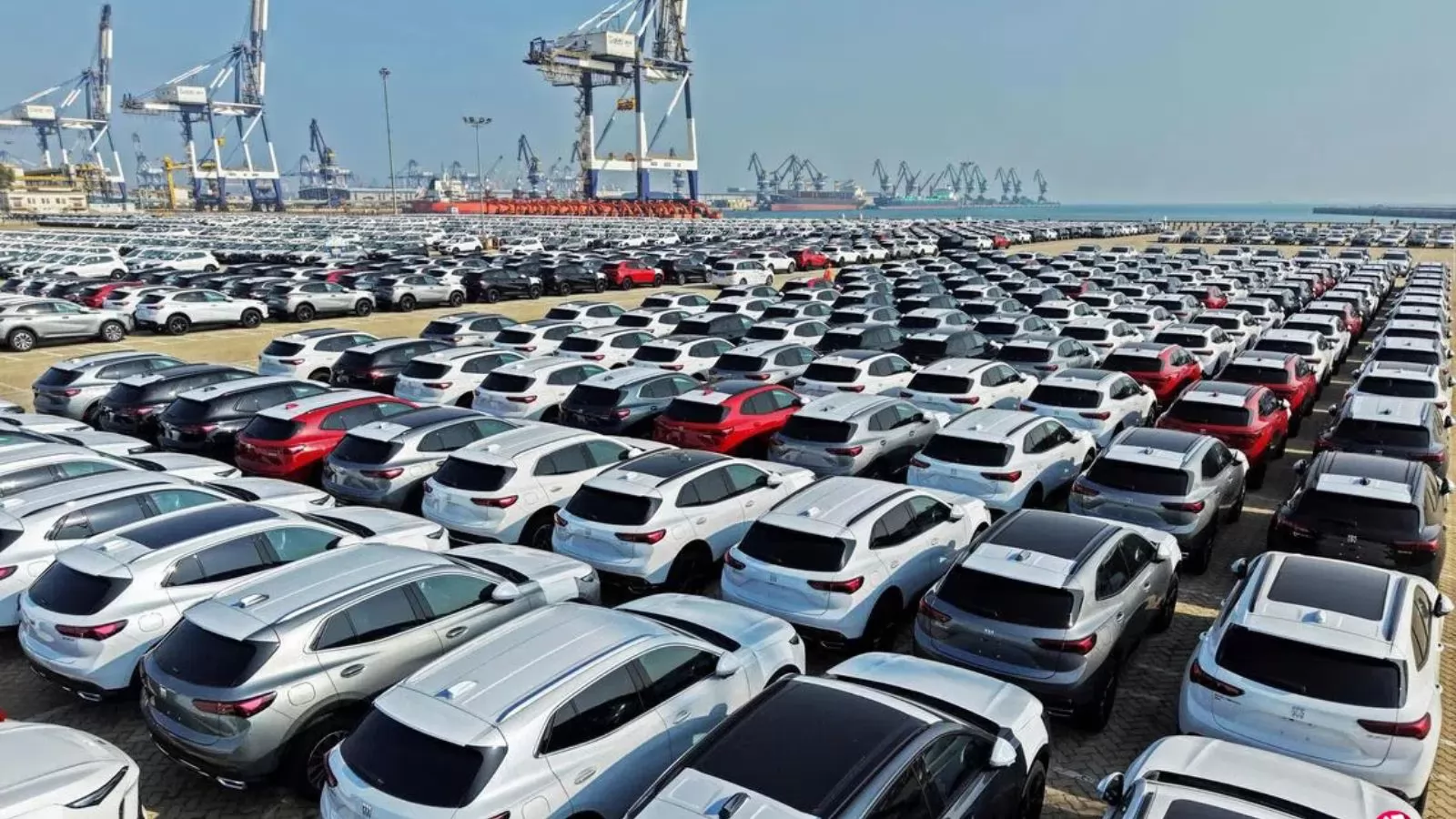
For international buyers, inspection is one of the most important steps because the vehicle is often purchased remotely. Online photos can help with initial screening, but they should not replace a proper inspection.
Exterior and Interior Condition
Inspect paintwork, body panels, glass, lights, seats, dashboard, controls, and other interior components. Differences in paint tone or panel alignment can indicate previous repairs.
Engine, Transmission, and Mechanical Systems
For gasoline and hybrid vehicles, major mechanical systems should be checked for leaks, abnormal noise, warning indicators, poor maintenance, or other signs of excessive wear.
Electrical and Safety Systems
Test electronic functions such as lights, cameras, sensors, air conditioning, displays, power windows, and other relevant safety or convenience systems.
Tires and Brakes
Tire wear, brake condition, and suspension performance should be reviewed because these components can add immediate costs after arrival.
Maintenance Records
Available service records should be compared with the reported mileage and overall vehicle condition. A consistent maintenance history makes it easier to evaluate the vehicle’s actual usage.
Pre-Shipment Inspection
When the buyer cannot inspect the vehicle personally, an independent or supplier-supported pre-shipment inspection can provide additional assurance. The report should clearly identify the vehicle, document its condition, and include sufficient visual evidence.
For its certified pre-owned vehicles, Unicom Motor states that its inspection process includes a 150-point inspection together with professional reconditioning where required.
How to Check a Used EV from China
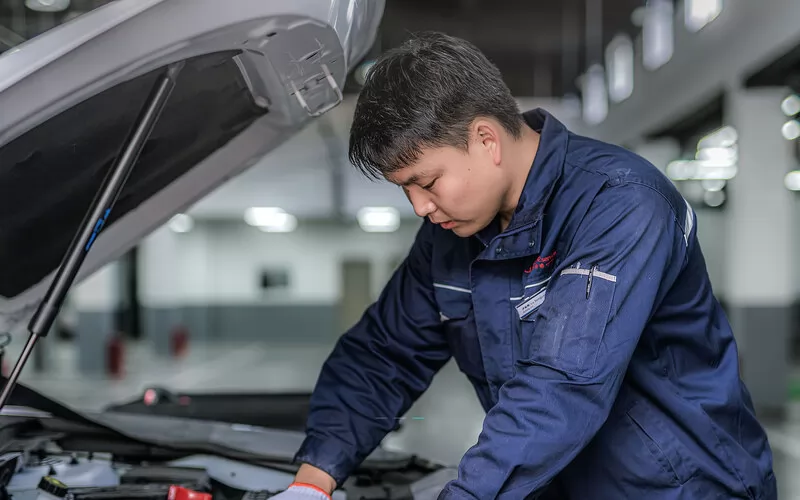
Used EVs require several additional checks because the condition of the battery and charging system can have a major effect on vehicle usability and value.
Check Battery State of Health
Where diagnostic information is available, buyers should review the battery’s State of Health together with vehicle age, mileage, usage history, and manufacturer specifications.
Confirm Charging Compatibility
Check the charging connector, charging system, and electrical configuration against the requirements of the destination market. A vehicle that works correctly in China may still require additional consideration for local charging infrastructure.
Review Battery Warranty
Confirm whether any remaining battery warranty applies and whether it can be transferred or recognized in the destination country.
Check for Accident or Water Damage
Previous collisions or water exposure can create additional risks for high-voltage systems. Any reported battery or underbody damage should be investigated carefully.
Verify Electronic Functions
The infotainment system, instrument display, charging interface, cameras, driver-assistance functions, and other electronic systems should be checked before shipment.
Can You Import a Used Car from China?
A vehicle’s eligibility for export from China does not automatically mean that it can be imported and registered in the destination country. Buyers need to check both sides of the transaction.
Check Vehicle Age Requirements
Some markets impose age limits on imported used vehicles. The buyer should confirm the applicable limit before purchasing.
Check Emission and Safety Standards
The vehicle may need to meet specific local emissions, safety, or technical standards. Differences between domestic and destination-market specifications should be identified in advance.
Check LHD and RHD Requirements
Left-hand-drive and right-hand-drive requirements vary by country. Buyers should confirm which configuration is permitted before selecting a vehicle.
Check Registration Rules
Import approval, customs clearance, inspection, homologation, and registration may involve different authorities. Requirements can vary considerably between markets.
Confirm the Rules Before Payment
Import regulations can depend on vehicle age, fuel type, emissions category, specifications, and destination country. Buyers should confirm current rules with the relevant customs or vehicle-registration authorities before committing funds.
What Documents Are Needed to Import a Used Car from China?
The exact document set depends on the vehicle, transaction, shipping method, and destination country. Common documents may include:
Additional documentation may be required for specific vehicles or destinations. For EVs, battery-related transport documentation may also apply depending on the shipping arrangement.
The VIN and key vehicle information should remain consistent across the relevant documents. Buyers should request a clear document checklist before shipment rather than assuming that every export follows exactly the same process.
How Much Does It Cost to Import a Used Car from China?
The advertised vehicle price is only one part of the final cost. International buyers should calculate the total landed cost before making a purchasing decision.
The final cost varies according to the vehicle, quantity, destination, shipping method, taxes, and local regulations.
For B2B buyers, comparing landed cost rather than vehicle price alone can provide a more accurate basis for supplier and vehicle selection.
FOB vs. CIF: Which Shipping Term Is Better?
The shipping term affects how transportation responsibilities and costs are divided between buyer and seller.
FOB
Under FOB, the seller’s responsibilities extend to the agreed FOB point, while the buyer generally takes responsibility for the main international transportation and later costs according to the applicable Incoterm.
FOB can be suitable for experienced importers that already have freight-forwarding or shipping arrangements.
CIF
Under CIF, the seller arranges the cost, insurance, and freight to the named destination port. Import clearance, duties, taxes, and many destination-side costs generally remain outside the CIF price.
Which Should Buyers Choose?
Neither term is universally better. The appropriate choice depends on shipping experience, order volume, destination port, logistics relationships, and the level of transportation control the buyer wants.
The selected Incoterm should always be clearly stated in the sales contract.
How to Buy Chinese Used Cars Step by Step
A structured process can reduce purchasing risks and unexpected costs.
Step 1: Define Your Vehicle Requirements
Specify the model, quantity, budget, mileage, powertrain, specifications, and destination country.
Step 2: Check Import Regulations
Confirm that the intended vehicle can be legally imported and registered in the destination market.
Step 3: Find a Reliable Chinese Used Car Supplier
Evaluate the supplier’s business credentials, sourcing channels, inspection process, export capabilities, and documentation support.
Step 4: Compare Available Vehicles
Compare age, mileage, specifications, condition, history, and estimated landed cost rather than looking at price alone.
Step 5: Verify the VIN and Vehicle History
Make sure the vehicle information matches the records provided by the supplier.
Step 6: Complete the Inspection
Arrange a pre-shipment inspection and resolve any major discrepancies before payment or shipment.
Step 7: Confirm Price, Incoterms, and Documents
Review the sales contract, payment terms, shipping term, responsibilities, and documentation requirements.
Step 8: Arrange Export and Shipping
Once the vehicle is ready, export procedures, shipping, customs clearance, and local registration can be coordinated according to the destination country’s requirements.
How to Choose a Reliable Chinese Used Car Exporter
A reliable Chinese used car exporter should provide more than an attractive vehicle price.
Verify Business Credentials
Confirm the supplier’s company information, business scope, and export capabilities.
Check Vehicle Sources
Ask where the vehicles come from and whether ownership, mileage, service history, and condition can be documented.
Request Inspection Information
A professional supplier should be able to provide sufficient vehicle information for due diligence before shipment.
Confirm Export Support
Ask which export procedures and documents the supplier handles and which responsibilities remain with the buyer.
Compare Total Costs
A transparent quotation should make it possible to understand the vehicle price, shipping-related charges, and other applicable costs.
Check After-Sales and Parts Support
For dealers and fleet operators, access to technical resources and genuine OEM parts can be important after the initial purchase.
Unicom Motor operates as a multi-brand automotive distributor with an established dealership network and export operation, providing international buyers with access to multiple vehicle brands alongside its used-car business.
Why Choose Unicom Motor for Chinese Used Cars?
For international buyers sourcing Chinese used cars, Unicom Motor combines vehicle sourcing, inspection, export support, and aftermarket resources within one automotive business. Its certified pre-owned program sources vehicles primarily through its dealer network and trade-in channels, followed by inspection and professional reconditioning where required.
The company also provides access to a multi-brand automotive portfolio, which can give dealers and importers more flexibility when sourcing different vehicle types. Its export operation supports vehicle preparation and international shipment, while its genuine-parts business provides an additional resource for maintenance after delivery.
For overseas dealers, importers, and fleet operators, this integrated approach can simplify the process from vehicle selection and inspection to export and ongoing support.
Buying Chinese Used Cars for Dealers and Fleet Buyers
For dealers, sourcing Chinese used cars is closely connected with resale potential, vehicle consistency, parts availability, and total landed cost. A supplier that can provide multiple vehicle options may also make it easier to respond to changing local demand.
Fleet buyers have different priorities. They may place greater emphasis on bulk availability, consistent specifications, maintenance requirements, operating costs, and long-term parts support.
In both cases, the lowest unit price should not be the only purchasing criterion. Reliable vehicle information, clear documentation, inspection, logistics coordination, and after-sales resources can have a significant impact on the commercial result.
Conclusion
Chinese used cars offer international buyers access to a broad range of gasoline, hybrid, and electric vehicles, but successful sourcing requires a structured evaluation process. Buyers should verify vehicle history and condition, inspect the vehicle before shipment, confirm destination-country import requirements, prepare the necessary documents, calculate total landed cost, and select a reliable exporter that can support the transaction smoothly.
For dealers, importers, distributors, and fleet operators, an established automotive supplier can simplify sourcing by combining vehicle selection, inspection, export coordination, and aftermarket support. Buyers looking for reliable Chinese used cars can contact Unicom Motor to discuss vehicle requirements, inspection information, export documentation, and shipping arrangements.
0
Comments
Leave a Comment
Your email address will not be published. Required fields are marked *
Name can't be empty
Email error!
Message can't be empty
😍
😜
😳
😌
😄
😘
😝
😒
😃
😚
😚
😛
😟
😧
😀
😉
😓
😱
😤
😣
😂
😥
😩
😠
😢
😭
😰
😨
😡
😆
😪
😅
😐
😇
😋
😴
👿
😕
😏
😷
😵
😟
😮
😯
😑
👧
👴
😧
😬
😾
👶
👱
👵
👸
🙀
👺
👦
👩
👨
😽
😿
🙈
💩
💥
💤
😼
😹
🙉
🔥
✨
💦
👎
✌
👆
👈
💪
💹
👍
👊
💴
💶
💷
💸
👉
💵
🙏
🌎
🏧
👏
💳
👇
💑
🙆
🙅
💁
👫
👭
🙎
🙇
👑
👔
Submit Comment
Most Popular
-
 Jan 29, 2026Find a Jetour Dealer Near Me: Your Complete Buying Guide
 -
 Jun 22, 2026BYD Ocean Series: Dolphin, Seal & Seagull EVs Explained
 -
 Nov 19, 2025Chinese Car Export New Policy Explained: Impact, Requirements, and How We Help You Meet OEM Compliance
 -
 Nov 14, 2025Fang Cheng Bao Ti7 Overview: Full Specs, Features & Highlights


Laster Blogs
-
 Sep 20, 2026BYD Chairman Wang Chuanfu Visits Our DENZA and LEOPARD Dealerships
 -
 Sep 11, 2026How Much Does a Used Car Cost in 2026? Prices, Factors & Import Costs
 -
 Aug 31, 2026Chinese Used Car Buying Guide: How to Choose a Reliable Vehicle from China
 -
 Jul 15, 2026How to Safely Import Used Electric Cars for Sale in China: The Ultimate Battery (SOH) and Charging Standard Guide


Set A Consultation Today
Name can't be empty
Email error!
Send Your Message
*We respect your confidentiality and all
information are protected.


